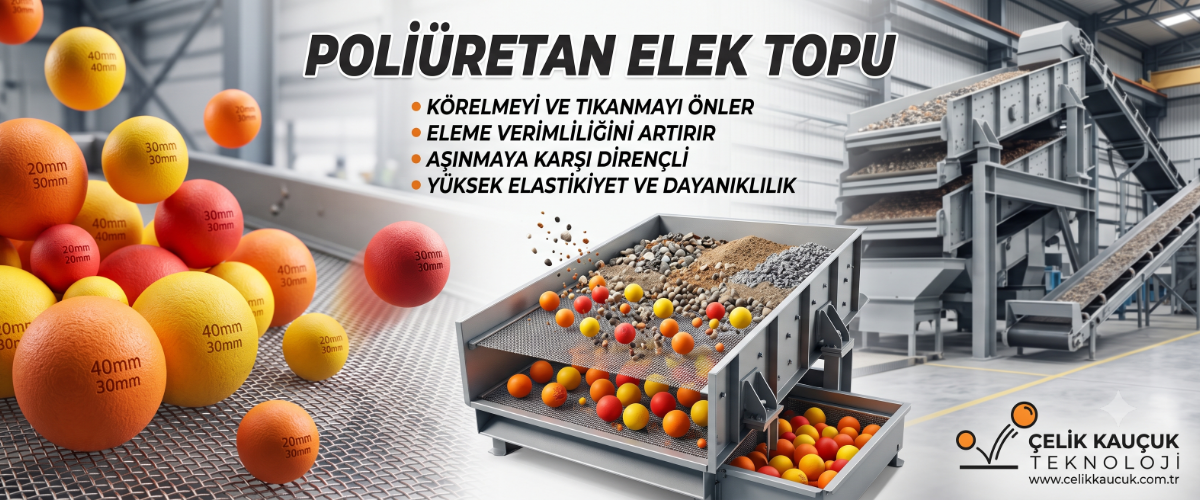
Polyurethane Screen Ball: Uninterrupted Performance and High Efficiency in Vibrating Screens
In industrial production processes, especially during the separation phase of powder and granular materials, vibrating screens play a critical role. However, one of the most common problems during the screening process that slows down production is the clogging (blinding) of the screen pores. The most effective solution used to eliminate this problem and ensure that screens operate at full capacity is the use of a polyurethane screen ball.
These bouncing balls, made of polyurethane material, have become an indispensable part of industrial facilities due to the superior physical and chemical properties they offer compared to traditional rubber balls.
What is a Polyurethane Screen Ball and How Does It Work?
Polyurethane screen balls, which are placed in specially designed trays in the lower layers of vibrating screening machines, move continuously with the vibration of the machine. Bouncing during this movement and hitting the screen wire (mesh) above, the balls dislodge materials that are stuck or adhered to the pores, ensuring the screen remains open at all times. Thus, it becomes possible for the material to flow and be separated without interruption.
Why Should Polyurethane Be Preferred?
The elastomeric structure of polyurethane material performs significantly better in harsh industrial conditions compared to rubber and other plastic derivatives. The main advantages provided by the polyurethane screen ball are:
High Wear and Tear Resistance: Screen balls working under constant friction and impact have a high risk of deformation. Thanks to its excellent wear resistance, polyurethane does not shatter and maintains its dimensions for a very long time.
Long Service Life: It has a lifespan that is on average 3 to 5 times longer than rubber balls. This minimizes screen maintenance and part replacement times (downtimes), thereby reducing operating costs.
Optimum Elasticity (Bouncing Performance): Polyurethane balls, which can be produced in desired hardness levels (Shore A), provide the most appropriate bouncing reaction to the machine's vibration and prevent blinding by almost 100%.
Chemical and Environmental Resistance: It shows high resistance against oil, grease, solvents, and various chemicals. It is also resistant to moisture and harsh weather conditions.
Food Grade Compatibility: It can be produced with non-toxic and odorless special polyurethane formulas complying with FDA (Food and Drug Administration) standards for use in the food and pharmaceutical industries.
Areas of Application
The hygiene, durability, and high performance provided by polyurethane screen balls make them a preferred choice in a wide variety of sectors:
Mining and Quarries: In sand, gravel, ore, and coal screening.
Food Industry: In flour, sugar, spice, grain, and seed screening systems.
Chemical and Fertilizer Industry: In the separation of granular fertilizers, powdered chemicals, and plastic raw materials.
Recycling Facilities: In the sorting and classification of glass, plastic, and metal waste.
Agricultural Industry: In feed mills and grain processing facilities.